Probabilistic Safety Assessment
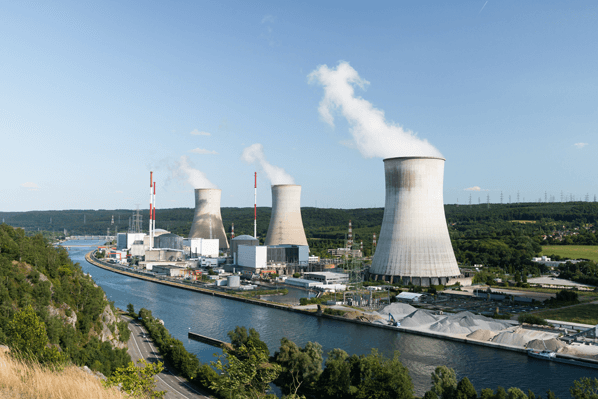
Nuclear Power Plant regulations include a requirement for a safety analysis based on deterministic and probabilistic analyses. Probabilistic Safety Assessment (PSA) is an established technique to numerically quantify the risk from a nuclear power plant. It provides a methodological approach to identify accident sequences that can follow from a broad range of initiating events and includes a systematic and realistic determination of accident frequencies and consequences. PSA mainly includes evaluations of internal events, internal hazards such as internal fire, internal flooding and turbine missiles and external hazards such as seismic, external flooding, high winds and aircraft impacts.
Fire Dynamics
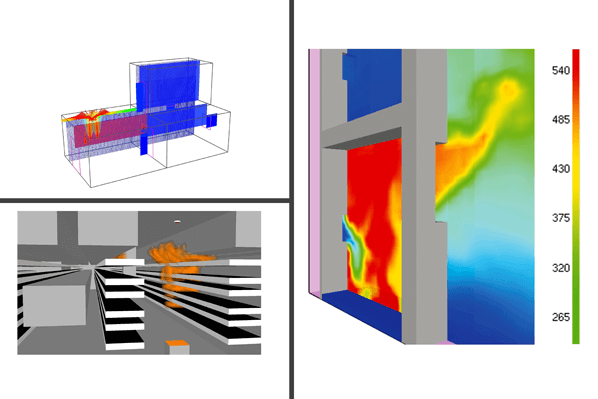
A realistic and analytical method to evaluate fire hazards and their consequences is fire modelling or simulation. Using equations that define fire growth and spread, a fire simulation can be performed for the entire duration of fire spread and sustenance. Such calculations can be performed using various methods from simple empirical models to complex 3D simulations. From a nuclear power plant fire safety perspective, such simulation models are integrated into the Fire PSA to improve the accuracy of the study. Fire simulations are also important as part of fire safety evaluation of commercial & residential buildings, hospitals, hotels, tunnels, ships, aircrafts, industrial installations such as power plants, process plants etc.

RiskSpectrum® Support
RELSAFE represents Lloyd’s Register in India for the Technical and Business Support for RiskSpectrum® software suite. Lloyd’s Register is the owner and developer of the RiskSpectrum® Software suite. RiskSpectrum® is one of the most widely used software suites for PSA (used by 60% of the world’s NPPs). The RiskSpectrum® user group is the world’s biggest risk management software user group.